Categories
Creative Breakthroughs For Writers: News, Workshops, Tips, Advice thoughts on writing

The Artist’s Way, LIVE

Do you ever wonder if your life could be different, or feel like there’s more you still want to experience, but you’re not sure where to start?

Millions of people around the world (including me) have followed Julia Cameron’s ‘spiritual path to higher creativity’ and felt the change. Get the most out of this course by sharing the journey with others, celebrating, laughing, commiserating, and uplifting. As Cameron says in her book, artists rise together.

The Artist’s Way changed my life.

Firstly, let me be clear:

  • You don’t have to be an artist or creative of any kind to do this course.
  • You don’t have to have ANY special talents, training or skills to do this course.

This course is not about:

  • developing skills or talents of any kind.

This course is about:

  • fun, play, joy, experimentation, being brave, following your intuition, listening to yourself, being gentle, connecting with others (if you want to), feeling, honouring, being generous, and deepening self-care.

This course might be right for you if:

  • you’re burnt out from your job, career or just all the things in life
  • you’re working on a creative field but you feel like you’ve lost the joy
  • you’re feeling dispirited because the realities of pursuing your creative passion just keep getting squashed by time, money, and a culture that does not value and prioritise creativity
  • you’re feeling disconnected from people, and feeling lonely or isolated
  • you just don’t know what to do with yourself anymore.

(Ech… if this is you, I’m sorry, lovely. These are big feelings and ones that (I know) are difficult to deal with.)

This course might also be for you if:

  • you’d just like to find more fun and joy in a life that has become weighed down by the daily grind and awful news cycle.
  • you know you need more restorative practice in your life, but you can’t see even a tiny moment in the day or week to find it.

Trust me – this course is for you. Yes, you! 🙂

Have questions? Want to hear me chatter on about the many ways The Artist’s Way changed my life? Email me. hello@josephinemoon.com

Like most things in life, the best way to get the most out of this course is to join a cohort of fellow recovering creatives who will keep you motivated.

Over three months, The Artist’s Way (the bestselling book written by Julia Cameron) will lay out how to recover your creative birthright – even if you think you can’t do anything even remotely “artistic”. If that’s you, you’re not alone. Many people feel that way. But if you’ve ever watched small children (or puppies or kittens!), you’ll have noticed that one of our first instincts in life is to play. And that’s all that creativity is: play. Sadly, though, must of us have (temporarily) forgotten how to do it. That’s why we need The Artist’s Way.

Twenty years ago, I completed The Artist’s Way to recover my innate creativity. I met with a small group of people every Thursday evening and we shared what we’d done during the week – the struggles, the breakthroughs, and the camaraderie of shared experience. We also brought our posters and other various practical activities to ‘show and share’, which was tremendous fun. We wrote our morning pages and we went on artist’s dates. And during that time, I figured out how to be a writer and live as an artistic being.

Since the day I got a book contract, I’ve been telling anyone and everyone about The Artist’s Way. This is the book that made me a writer. Yet, it’s not a book about writing, it’s a book about creativity and right to have it, use it and enjoy it, whatever your passion or special interest might be, and whether or not it sells, is financially successful, or has an ‘important’ outcome of any kind.

Since then, I have opened the book to revise a section of The Artist’s Way every year that I’ve been writing professionally. It’s just that good.

Finally, I know it’s time for me to go back and do The Artist’s Way again and this time I want to share it with you too.
Categories
Uncategorized

The Life of a Recovering Perfectionist

My most popular post for 2014 was this little piece… Enjoy!
———-
“I enjoyed your article in today’s ‘Sunday Life’ but please, please, please – ‘slither’ is what a snake does, ‘sliver’ is a small piece of kitchen bench!” (Fiona)

Yesterday, I had a first-person feature article published in the Herald Sun’s Sunday Life magazine, talking about the importance of following your dreams and I related my experience of being in the wrong career, of suffering chronic fatigue syndrome at just 29 years of age, and the long road to recovery. Part of that journey was learning to manage my inner perfectionist. (I don’t think I’ll ever truly get rid of the perfectionist, so I have to learn to manage her instead.) I received some wonderful feedback on the article, including the quote above from a reader named Fiona, who helpfully pointed out the typo in the very first paragraph of the article.

imagesI do actually know the difference between slither and sliver, but my fingers went for the typo while I was writing the article (probably precisely because I was writing it with all those distractions I describe in the first paragraph) and there it stayed, even while multiple editors read it and sent it to print. It’s just one of those things that happens in life.

Now, let me sidestep here and tell you about a teenage girl I met at one of my library talks, who was so passionate about writing and just bubbling with conversation about what she was doing. BUT, she also talked about how she would sit in a cafe for hours to write, but only ever get a few sentences on the page because she would work them and rework and, essentially, be so afraid of getting it wrong that the words she wanted to get just didn’t make it to the page. Truly, this broke my heart. How unbelievably sad. That girl has words waiting for the world and her fear is stopping them getting there. This is a clear example of how perfectionism is a destructive force in our life.

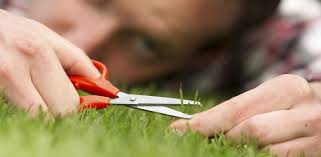
Perfectionism is NOT about excellence. In fact, ‘perfect’ doesn’t even exist! It is a constructed idea in OUR OWN MIND. It is the perpetual search for the worst in ourselves, not the best. And because it is a constructed idea, in your own mind, no one else can ever convince you that something is good enough, no matter how much evidence they present. Only you can decide to trust and let go.

So, back to my reader feedback. Of course, as a recovering perfectionist, my first response to that was horror, shame, humiliation. Stories running through my head like, ‘Oh my God, my article is out there for the whole country to read and there’s a spelling mistake in the first paragraph!’ ‘No one will buy my book now because they’ll think I’m a crap writer!’ ‘People will think I’m stupid!’ ‘How could I have been so stupid??!!!’

But then, as a recovering perfectionist, I quickly identified these thoughts as illusions in my own mind. Sure, some people might think those things. Many people wouldn’t even notice. And many people, going by the rest of the feedback I received, took away something really valuable from the article. Was it better for it to be out there at all? I’d like to think so.

I used to be an editor of books, and despite four or five sets of eyes looking at them before they went to print, they invariably came back with at least one error in them. It’s just one of those things that happens because we are human in all our imperfect glory.

I also realised that Fiona’s feedback gave me a wonderful opportunity to once again heal my perfectionist and choose to NOT lie awake at night fretting about my errors but instead go to sleep feeling really peaceful that my article brought so much joy to so many people. Perfectionism is a choice. Self nurturing and acceptance is also a choice. I choose to be kind to myself. My words may not be perfect but they can still have power.

**disclaimer: I am once again writing this at 6.45am while my toddler watches Peppa Pig so I will embrace all errors ahead of time 🙂 **

Categories
Creative Breakthroughs

Creative Breakthroughs: My Writing Room

I had a huge breakthrough this weekend and for me it’s so important that I’m going to continue posting about this topic every so often over the course of the year. It started like this.

IMG_1930Recently, I was invited to submit a photograph and some words about ‘my writing room’ to a UK website. I’ve harboured dreams of a magical, inspiring, nourishing writing room for years. And you may know that I’ve written about my intention to create a wonderful writing room for the past two new year’s resolutions. But I keep failing to achieve my dream.

Now, I’ve dithered about this photo task for weeks (I’ve lost count of how many). And the reason is this: my room isn’t what I want it to be. It’s not finished. I still have an unpainted wall and door, broken and missing glass in the French doors, unpolished floorboards covered by a rug, and the cheapest curtains (for want of a word) I could find as a temporary stop until ‘the real curtains’ arrive.  It’s not pretty enough. I don’t have everything just as I want it. I cannot begin to tell you how much time I’ve spent lying awake, stressed about this task!

I’ve been writing seriously now since 1999 and I still don’t have my dream writing room. But, over that time my writing space has improved. I actually wrote an entire memoir on my laptop in bed at one point because I didn’t have any space just of my own. And this time last year, I had just one corner of a room that was also shared by our senior cat and her kitty litter (so lots of smell and grit underfoot), her frequent deposits of cold vomit on the floor, the baby’s change table and the nappy bin (more smell), and the dirty clothes basket. Life in my writing room has, absolutely, improved.

IMG_1920But I’m still not where I want to be—somewhere in the gypsy cave with silks and lanterns and fairy lights, a desk made of gnarled wood taken from an enchanted forest and carved by elves, magical doorways, couches, cushions, a music player, candles, perfect lighting for day and night, perfect temperature control and aromatherapy. Somewhere peaceful with beautiful scenery. Oh, and somewhere my toddler can’t find me.

And what I’m really saying is my room is not perfect. No wonder I think I keep failing to achieve my dream.

*** And this, my friends, was my breakthrough. ***

Perfection—the deadly word for all creative types. Perfection, the unreachable, the unattainable. The tortuous quest to find the worst in ourselves (not the best).

The excuse to stop.

The excuse to not finish.

The excuse to not enjoy ourselves.

The excuse to hide our creativity from the world.

The excuse to fail.


From one recovering perfectionist to another, let me be clear:

PERFECTIONISM IS AN EXCUSE.

But it’s not ready. It’s not finished. It’s not good enough. It’s not what I want it to be!

Excuses. All of them.

Oh, they may be well founded in core beliefs, inherited expectations, fears that pretend to protect us from shame, punishment or embarrassment. But they’re still excuses. And they can sneak up on you and sidle into your mind very quietly and sit there for weeks, months, or years. Just as they did with me, provoking anxiety over my writing room.

But after years of stressing about it, I’ve found freedom.

I now know the reality is this: Creating and decorating my writing room is limited by the structure and size of the room; the fact that we’re still renovating a 113-year-old house and the rest of the house isn’t ‘finished’ yet either; and finances and priorities like, you know, essential plumbing, seven horses to feed and food and bills. There are limits to what I can do and that’s okay. That’s life. In fact, we need limits or we’d lose our minds. It doesn’t mean I have to stop, or have to hide what I’ve done. It’s a work in progress. Nothing in life is ever finished. Nothing. It just changes from one thing to another.

And the lesson here is that this applies to every creative aspect of our life. Everything that seems big and overwhelming can be done by breaking it down into its components. If you want to be an author, you’re going to have to write a book. (Better yet, you’re going to have to write a page, and then another page, and another.) If you want to be an opera singer, you’re going to need to take a lesson. Want a holiday but can’t afford one? Go to the beach for the day. Want a horse but don’t have land? Go to a riding centre and ride for a day. Want to change the colour of the walls in your bedroom? You might first need to de-clutter the room so you can actually reach the walls.

And if you want the perfect writing room? Start with the perfect potted plant… which I did, this weekend, by the way. Isn’t it lovely? And I bought a lamp, too. Just two things for my writing-room-in-progress. And I can’t tell you how much joy that fern and that lamp bring me when I walk into the room. The whole space suddenly feels welcoming and nurturing and I want to spend time there.

So, loud and proud, I’m sharing this with you. This is my writing room. Not finished. A work in progress. And it will probably always be a work in progress for the rest of my life. I accept that now. And I am amending my new year’s resolutions from ‘create my perfect writing room’ or ‘fix my writing room’ to ‘continue to nurture my writing room’.

Because nurturing—of ourselves, our family, our careers, our creativity, and our living spaces—is a daily necessity. I will nurture my writing room and in return, my writing room will nurture me.